Independent community archive · Afghanistan and the diaspora

The sounds of Afghanistan,
carried on cassette.

A living archive of Afghan music, radio, regional traditions, popular culture, and recordings made in exile. Explore the artists, studios, languages, and journeys held inside each tape.

0Albums
0Audio files
5+Decades documented
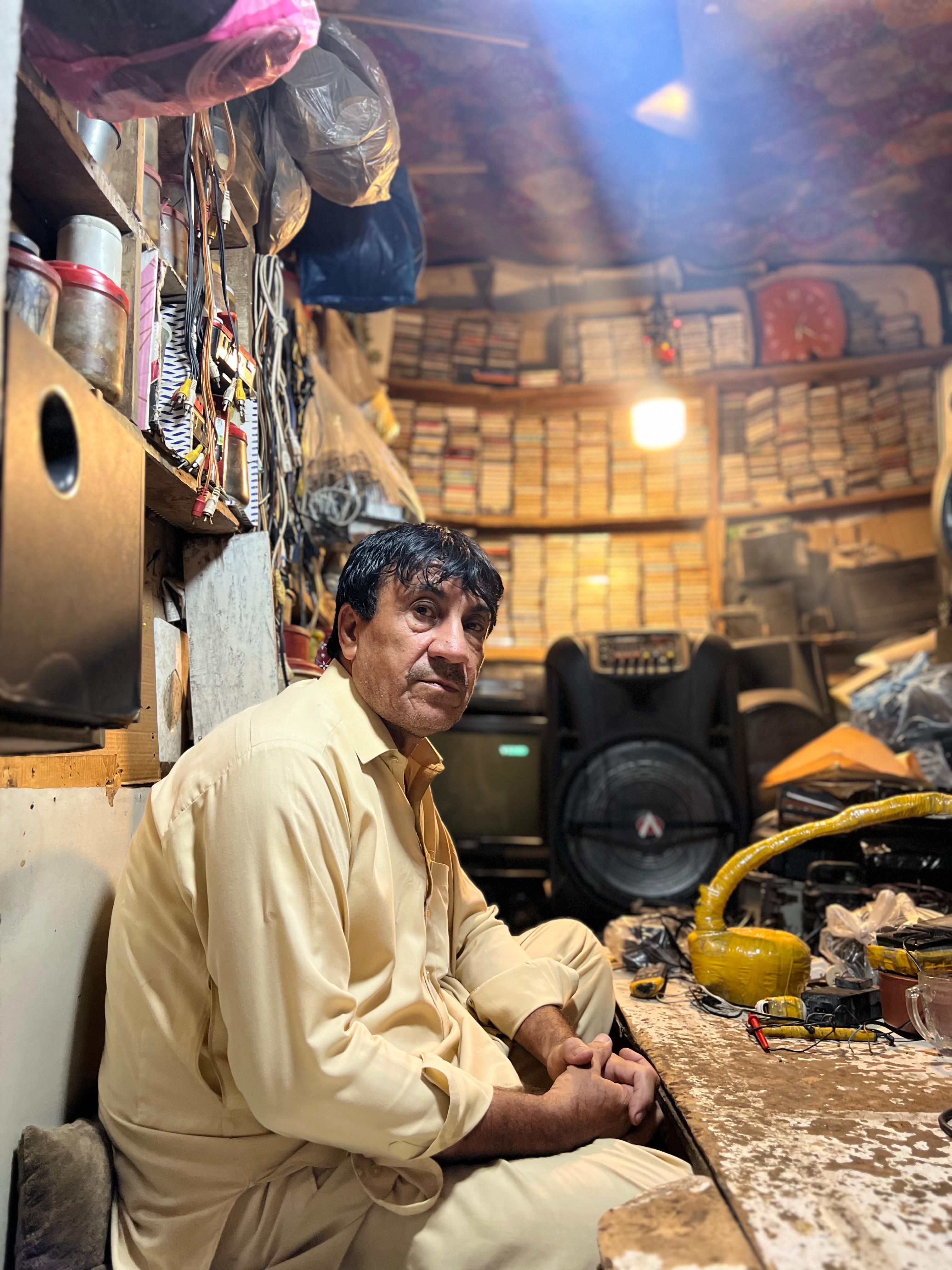
Mohammad Hassan Kaka Zmarai with his cassette collection
Photo: Saad Salarzai
Featured collection

Mohammad Hassan “Kaka Zmarai” Collection

A major part of the archive comes from collector Mohammad Hassan “Kaka Zmarai”, who has safeguarded thousands of Afghan tapes in Peshawar while living through decades of displacement. His collection preserves not only recordings, but also vital knowledge about musicians, studios, refugee music networks, and the everyday circulation of Afghan cassettes.

The Afghan Cassette Archive is working directly with him to digitize, document, and support this living archive so that both the tapes and his knowledge remain available for future generations.

0 tapes currently online Preservation partner · ACA × Kaka Zmarai
Start with a story

Ways into the archive

The collection is more than a list of tapes. Begin with a voice, a region, a technology, or the movement of Afghan music across borders.

The visual archive

Cassette covers in motion

Pause with your cursor · Select a cover to listen
Recently catalogued

Latest additions

Newly digitized and documented recordings from the growing collection.

Beyond the catalogue

Research and public life

Follow Afghan cassette culture through exhibitions, writing, broadcasts, public programs, and community knowledge.

Afghan Cassette Archive · Continuous listening

Archive Radio

A continuous journey through rare Afghan recordings, radio performances, instrumentals, and sounds selected from the archive. Press start once and let the station continue.

Radio test ready
Afghan Cassette Archive Radio
Archive listening mode Radio Afghanistan test playlist
The expanded ACA radio library is ready for shuffle, A–Z rotation, repeat playback, album links, and genre-filtered listening.
Afghan Cassette Archive
Now playing

Press Start Radio

Radio Afghanistan selections
Press Start Radio to begin
Volume
Press play once. The station will continue until this browser tab is closed.
0special tracks
0artists featured
0remaining in queue
Listening history

Recently played

  1. Nothing has played yet.
Continuous listening

Designed for continuous playback

Café Mode enlarges the cover and controls, requests fullscreen, and keeps the display awake where the browser supports it.

Designed for uninterrupted listening at home, exhibitions, cafés, libraries, and cultural programs. Every listener begins an independent rotation when they press play.

The radio can now be filtered by genre, decade, language, artist, and source. When a radio selection is tied to a cassette already in the Archive, use “Open full cassette” to jump directly to that album and continue listening to the complete cassette. Noor Khan Collection recordings retain their individual donor notes.

Searchable digital collection

Browse the archive

Combine genre, decade, language, artist, and collection tags to explore the catalogue. Select any cassette to view its metadata, cover, permanent link, and available audio.

Explore the collection

Find a cassette

Quick filters
Select a cover to view the full cassette record
Afghan Cassette Archive · Collection 01

Mohammad Hassan
“Kaka Zmarai”

One collector, thousands of cassettes, and a lifetime spent keeping Afghan music alive through exile, displacement, instability, changing technology, and loss.

Thousandsof cassettes preserved
0digitized tapes on ACA
OngoingACA preservation partnership
Mohammad Hassan Kaka Zmarai
Kaka Zmarai · Peshawar · Photo: Saad Salarzai
Photo: Saad Salarzai
Collector biography

A personal archive built one cassette at a time.

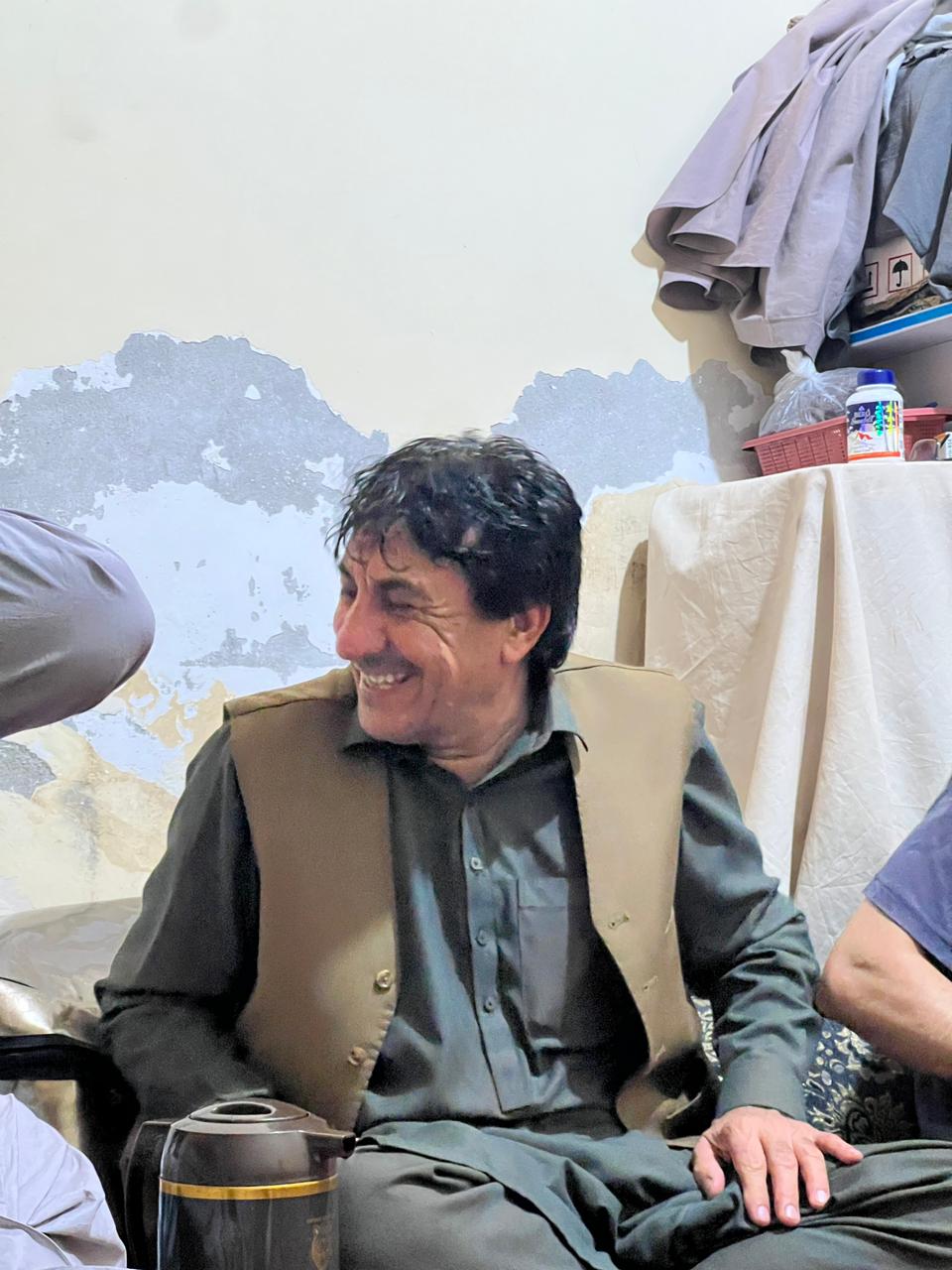
Mohammad Hassan Zmarai, affectionately known as Kaka Zmarai, is an Afghan cassette collector, recording producer, and cultural custodian based in Peshawar, Pakistan. For decades, his life has revolved around Afghan music: collecting tapes, identifying singers and musicians, recording artists, distributing cassettes, and preserving recordings that might otherwise have disappeared.

His collection contains thousands of Afghan cassettes spanning popular music, folk and regional traditions, refugee recordings made in Pakistan, rare radio material, private and majlis recordings, cassette artwork, handwritten labels, and information about musicians and recording sessions.

But the importance of Kaka Zmarai cannot be measured by cassette numbers alone. His knowledge of artists, labels, studios, musicians, recording histories, and refugee musical networks often provides context that cannot be recovered from a cassette sleeve or audio file.

For the Afghan Cassette Archive, his contribution is imperative. He is not simply a collection holder. He is a living source of musical history whose memory helps ACA identify recordings, correct incomplete metadata, understand how albums circulated, and reconnect tapes with the communities and musicians that produced them.
Life, displacement & uncertainty

Preserving music while living with instability.

Kaka Zmarai’s archive was built under circumstances very different from those of a university library or national institution. He has preserved Afghan music while living as a refugee in Pakistan, often without the stable storage, funding, institutional protection, or long-term security that formal archives take for granted.

His family’s future in Pakistan has remained uncertain, while changing policies affecting Afghan refugees have made it increasingly difficult to know whether the life and archive he built in Peshawar can remain secure.

The collection itself has already suffered major loss. According to oral-history information gathered through ACA, an earlier shop was demolished and thousands of cassettes were lost. The surviving archive therefore represents not just decades of collecting, but what endured after displacement, physical loss, economic hardship, and repeated uncertainty.

International reporting has also documented the wider pressures facing Afghan musicians and cultural workers in Pakistan as deportations and forced returns increased. For Kaka Zmarai, the possibility of return carries an additional fear: his identity and livelihood are inseparable from music, while musical activity has faced severe repression under Taliban rule.

ACA editorial note: Existing documentation contains differing accounts of exactly when Zmarai first settled in Pakistan. Until this chronology is confirmed directly with him, ACA describes him as having lived and worked in Pakistan for decades rather than assigning a precise migration year.
The physical archive

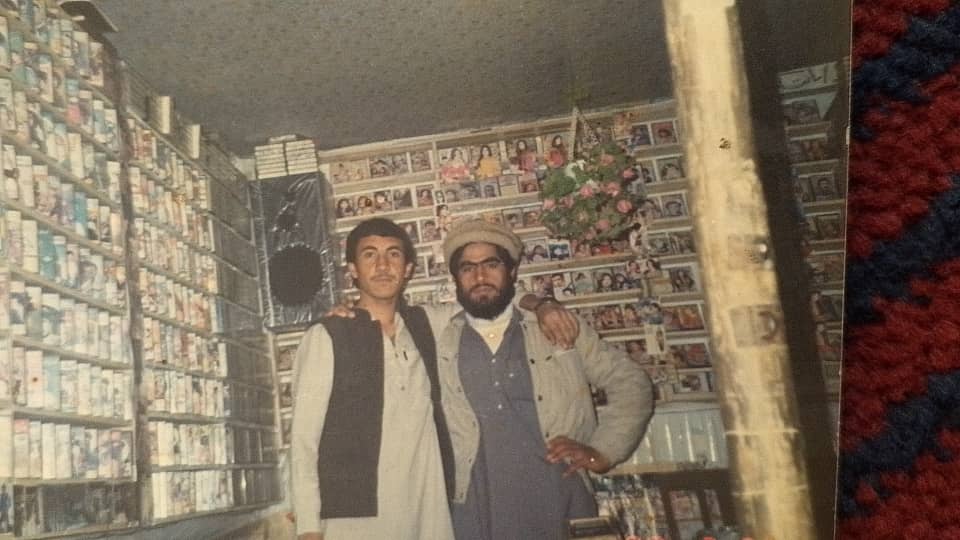
The shop became an informal archive for Afghan music in exile.

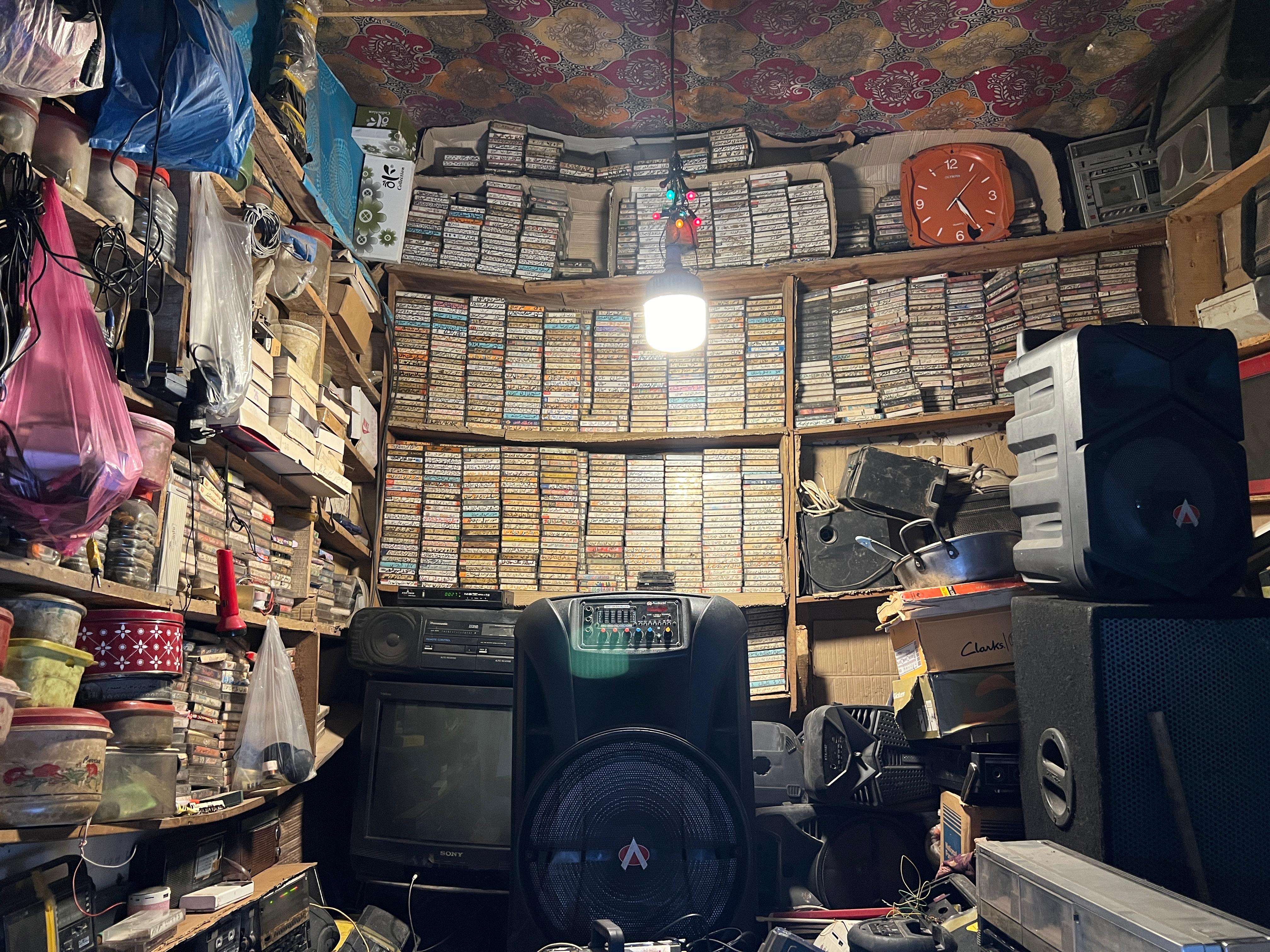
Kaka Zmarai’s collection was not assembled as a museum exhibition. It grew through the everyday circulation of Afghan music: albums purchased from cassette sellers, recordings brought by musicians, copies exchanged between listeners, radio-derived material, private tapes, and music produced within refugee communities.

His shop and recording activities became part of the informal infrastructure that helped Afghan musical life continue outside Afghanistan. Musicians could record, cassette sellers could circulate new material, listeners could find familiar voices, and displaced communities could remain connected to music from home.

This makes the collection especially valuable to ACA because it documents how music actually moved — between Kabul, Peshawar, refugee neighborhoods, cassette studios, private gatherings, and eventually the worldwide Afghan diaspora.

The collection continues beyond older commercial releases. Zmarai has also supported and documented Afghan refugee musicians, including recordings connected to newer waves of displacement. In that sense, the archive preserves both what Afghans carried with them and what they created after leaving home.

Commercial releases

Afghan cassette labels, Kabul studios, and widely circulated albums.

Refugee recordings

Music created, recorded, and circulated in Pakistan.

Mahali / Folk

Regional performers, local repertoires, and musical traditions.

Radio & Majlis

Broadcast-derived, private, social, and informal recordings.

Kaka Zmarai × Afghan Cassette Archive

Supporting the collector while preserving the collection.

Kaka Zmarai
Photo: Saad Salarzai

The Afghan Cassette Archive is working directly with Kaka Zmarai to make sure this collection is not lost. The goal is not to simply take recordings from his shelves and place them online. ACA’s approach is to work with him as a preservation partner.

Zmarai contributes first-hand knowledge about artists, cassette labels, recording sessions, studios, musicians, regional repertoires, and refugee music networks. In many cases, his memory supplies information that does not exist anywhere else in written form. That makes his contribution essential to the accuracy and historical value of the Afghan Cassette Archive.

Supporting Kaka Zmarai means supporting the archive itself. His knowledge cannot simply be recreated later from digital files. Preserving his oral history, involving him in cataloging decisions, and helping him continue the work are as important as transferring the audio.

01
Practical support

ACA is working to provide equipment, preservation materials, logistical assistance, direct support where possible, and help identifying grants, donors, and cultural institutions that can assist Zmarai and the collection.

02
Build locally

Establish a safe digitization station in Pakistan and train people on the ground so preservation can continue locally rather than depend on occasional outside visits.

03
Digitize

Create preservation-quality transfers of vulnerable recordings while keeping the physical cassette and its artwork connected to the digital record.

04
Document his knowledge

Record Zmarai’s first-hand information about musicians, studios, cassette companies, recording circumstances, and refugee musical life.

05
Preserve for future generations

Build stronger metadata, preservation copies, contextual writing, and long-term storage so future listeners inherit more than anonymous audio files.

An imperative contribution

Kaka Zmarai is not simply the source of a group of tapes. He is one of the people who makes the Afghan Cassette Archive possible. His decades of collecting, recording, identifying, and safeguarding Afghan music — together with the knowledge he continues to share — form an indispensable part of the archive itself.

Photo essay

Kaka Zmarai, his collection, and the world around the tapes.

Photography: Saad Salarzai
Kaka Zmarai photo essay
Kaka Zmarai and the living archive he has maintained through decades of displacement. Photo: Saad Salarzai.
Sources & documentation
  • Mohammad Hassan Zmarai / Afghan Cassette Archive project documentation and oral history.
  • ARTE Reportage — Pakistan: Guardians of Afghan Music (2025).
  • The New York Times — A Refuge for Afghan Music Is at Risk of Falling Silent (January 17, 2026).
  • ACA documentation concerning Zmarai’s collecting, recording work, refugee music networks, and the loss of part of the earlier collection.
  • Preservation planning developed collaboratively between Kaka Zmarai and the Afghan Cassette Archive.
  • Photography: Saad Salarzai.
Why his contribution matters

The archive is not only the recordings. It is also the knowledge required to understand them.

Through his decades of collecting and recording, Kaka Zmarai preserves information about people, places, studios, cassette companies, musical networks, and refugee communities that may never have been formally documented. ACA is committed to preserving both the tapes and the knowledge of the person who kept them.

Browse the digitized tapes

From the Zmarai Collection

Search this collection
Collection credit

These recordings are digitized from the collection of Mohammad Hassan Zmarai by the Afghan Cassette Archive. We extend our sincere thanks to Kaka Zmarai for allowing material from his collection to be documented and preserved, and for contributing the first-hand knowledge needed to understand the artists, recordings, labels, studios, and musical networks represented within it.

Stories, pathways, and terminology

The archive is a map of Afghan musical life.

Cassettes connected radio studios, neighborhood music shops, family gatherings, refugee communities, and artists working across borders. These pathways help visitors explore the collection through cultural history rather than catalogue numbers alone.

Curated listening

Explore by theme

Each pathway opens a live selection from the archive. New recordings automatically join these groups as the catalogue grows.

Archive guide

How to read the catalogue

The archive separates musical style, language, place, format, and recording context whenever enough information is available. Some terms remain broad because cassette documentation is often incomplete.

Mahali

Local or regional music associated with a community, province, language tradition, or performance practice rather than one standardized national style.

Majlis / Majlisi

Music captured or presented in a social gathering, private performance, celebration, or informal listening environment.

Kharabati

A Kabul-centered classical and ghazal tradition connected to hereditary musicians, poetic repertoire, and the historic Kharabat quarter.

Diaspora Recording

Afghan music recorded, released, duplicated, or circulated outside Afghanistan, including traditional repertoire, new arrangements, popular styles, and recordings made for displaced and diaspora communities.

Radio Recording

A cassette containing broadcast material, studio performances, off-air recordings, radio programs, or songs associated with radio circulation.

Bootleg

An unofficial duplication or compilation. The term describes how a cassette circulated and does not diminish its historical or cultural value.

Amateur Recording

A non-commercial or informally captured performance whose sound and documentation may differ from a formal studio release.

Unknown / Incomplete

Many tapes arrived without reliable dates, track lists, or production credits. These gaps are shown honestly and may be updated through community knowledge.

Why cassette culture matters

Cassettes allowed Afghan music to survive censorship, war, migration, damaged institutions, and the disappearance of studios and master recordings. A home copy or music-shop duplication may be the only surviving trace of a singer, performance, arrangement, or broadcast. The archive preserves those objects as evidence of how people listened, remembered, and remained connected.

Press attention · Radio · Journalism

In the press

Selected radio documentaries, broadcasts, and reporting about the Afghan Cassette Archive, its international preservation network, and the effort to keep Afghanistan’s endangered musical memory accessible.

5Featured stories
3Audio broadcasts
2025–26Coverage period
The
World
PRX · Radio & digital feature
October 9, 2026Audio feature

Keeping Afghanistan’s Musical Tradition Alive

The World profiles the Afghan Cassette Archive and the effort to preserve Afghan musical recordings at a time when music, musicians, instruments, and recordings remain under severe threat inside Afghanistan.

The World · PRX
Listen & read
Echoes
of Afghan
Music
Interview · Video feature
October 2026Interview

Echoes of Afghan Music — Afghan Cassette Archive Interview

Echoes of Afghan Music interviewed Afghan Cassette Archive founder Omid Jahan about the project and its work preserving Afghanistan’s recorded musical heritage. The platform focuses on documenting and sharing Afghan music at a time when musicians and musical expression have faced severe restrictions, highlighting the endurance of Afghan artists, traditional sounds, and cultural memory across conflict and displacement.

Echoes of Afghan Music · YouTube
Watch the interview
KALW
Crosscurrents · Audio & transcript
June 18, 202611:28 audio report

Tapes That Cross Borders

Christopher Alam visits the Oakland archive and traces the dangerous, expensive route rare recordings travel from Afghanistan and Pakistan to preservation in California.

KALW Crosscurrents · By Christopher Alam
Listen & read
ACoM
American Community Media · Feature
May 6, 2026Written feature

The Bay Area Archivist Saving Afghanistan’s Musical Legacy

A reported profile of the archive’s Oakland collection, Omid’s connection to Afghan music, and the cross-border network helping endangered tapes survive war, censorship, and displacement.

American Community Media · By Christopher Alam · Photography by Peter Schurmann
Read the article

“What I’m doing is a form of resistance.”

Omid J · quoted by KALW and American Community Media
Listening sessions · Workshops · Broadcasts · Presentations

Events & Programs

Upcoming and past public programs where the Afghan Cassette Archive brings endangered recordings back into shared cultural life through talks, workshops, listening sessions, broadcasts, and live cassette sets.

8Linked event records
5Cities & platforms
2026Program year
Oct252026
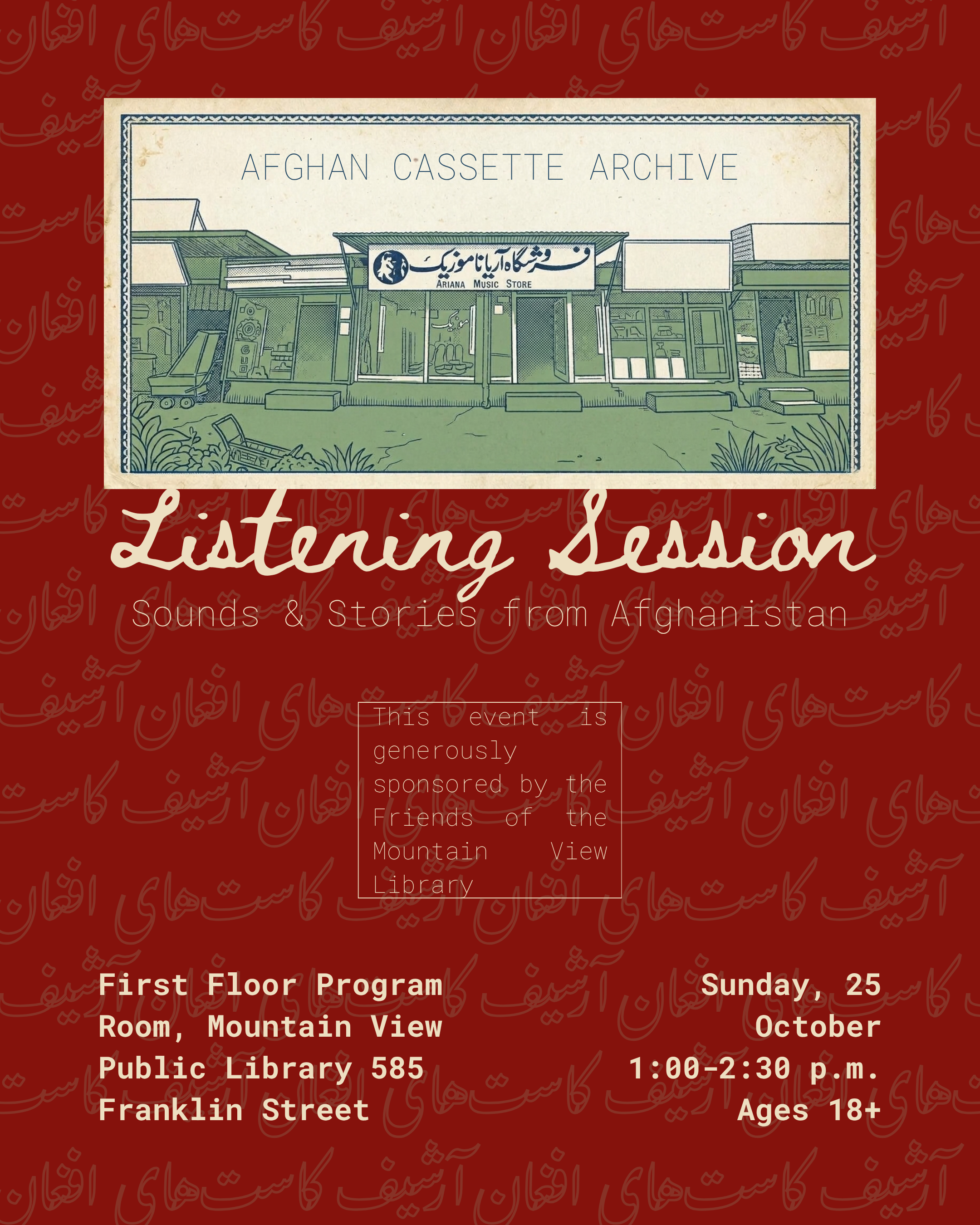
Mountain View Public Library · Multimedia listening session

Afghan Cassette Archive: Stories, Sounds, and Music from Afghanistan

Sunday, October 25 · 1:00–2:30 PM · Mountain View Public Library · 585 Franklin Street, Mountain View, CA 94041

Join Omid Jahan, founder of the Afghan Cassette Archive, for a multimedia listening session exploring Afghanistan’s musical history through rare cassette recordings, archival materials, and personal stories. The program highlights Afghan music from different eras and communities, including recordings preserved from Afghanistan and the Afghan diaspora. Registration is recommended; walk-ins are also welcome.

Flyer for Afghan Cassette Archive: Stories, Sounds, and Music from Afghanistan at Mountain View Public Library on October 25, 2026 Event flyerView full size ↗
Sep032026
Mazikaa Enterprise × Afghan Cassette Archive · Listening session

Sounds of SWANA: Afghan New Wave

RootStock Arts · Oakland, California · 6:30–9:30 PM

Presented by Mazikaa Enterprise and hosted by Omid Jahan of the Afghan Cassette Archive, this session explored Afghan popular music of the 1980s through rare cassette recordings and historical context, including synthesizers, drum machines, and global pop influences. The program also incorporated archival music videos on CRT televisions and offered both in-person and online access.

May162026
Discostan · Presentation & cassette DJ set

An Afternoon with the Afghan Cassette Archive

2220 Arts + Archives · Los Angeles, California

A guided journey through Afghan cassette history followed by a live OMJVinyls set, moving from archival listening into folk, pop, ghazal, and forgotten electronic sounds.

Apr202026
Refuge Worldwide · Event record

Iran Solidarity Show — Highlights

Archival broadcast follow-up

A companion social record from the Refuge Worldwide program, documenting the live activation of archival Afghan sound in solidarity with artists, refugees, and displaced communities.

Apr192026
Refuge Worldwide · Radio broadcast

Iran Solidarity Show

Omid Jahan / OMJVinyls · Analog Afghan & Afghan Cassette Archive

An archival mix centered on Afghanistan while tracing shared struggles across the region through displacement, exile, women’s freedom, solidarity, and music that persists across borders.

View the Instagram Reel ↗

Mar092026
School of Visual Arts · Presentation

Afghan Cassette Archive at SVA

New York City

A presentation introducing audiences to Afghanistan’s cassette era, the archive’s preservation work, and the ways music carried cultural memory across war and diaspora.

Feb112026
British Council Pakistan · Workshop

Archiving Afghan Memory and Migration Through Music

Pakistan Heritage Exchange · Day 2

A workshop examining how Afghan music survived war, censorship, migration, and institutional collapse through portable cassette culture, informal refugee archives, digitization, and community stewardship.

Social-media links open on their original platforms and may require Instagram or Facebook to display the complete post, images, or video.
About the project

Preserving recordings and the lives around them.

The Afghan Cassette Archive is an independent, community-driven effort dedicated to preserving and documenting Afghan music and cassette culture. Cassettes were a primary medium through which Afghan music was distributed, shared, and kept alive—across borders, through diaspora communities, and in living rooms around the world.

The cassettes, audio recordings, images, and related materials presented on this platform are shared strictly for educational, historical, research, and archival purposes. This project operates as a non-commercial cultural-preservation initiative.

All recordings and media remain the property of their respective artists, producers, labels, broadcasters, and copyright holders. We do not claim ownership unless explicitly stated. Rights holders may contact the archive to request updated crediting or removal.

Select cover to view the protected archival preview
Archive object

—

—

Listen

Audio

Get in touch

Have a cassette to contribute? Know an artist we've missed? Want to collaborate? We'd love to hear from you.

✉ analogafghan@gmail.com
Afghan Cassette Archive is an independent, community-driven effort. All materials are shared strictly for educational, historical, research, and archival purposes on a non-commercial basis. Rights holders may contact us to have material credited differently or removed.
Choose a cassette or start Archive Radio